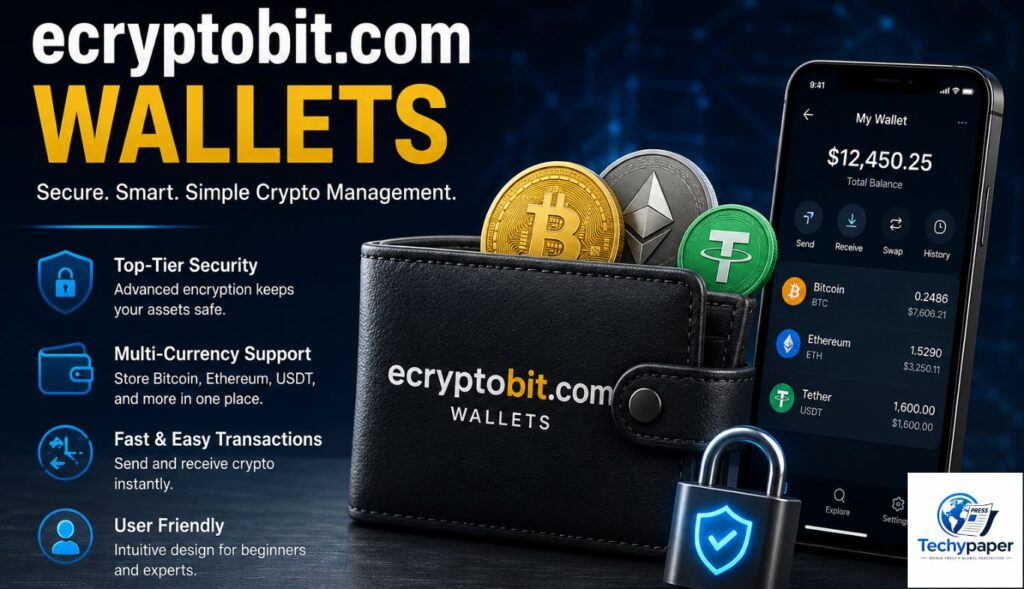

Cryptocurrency has changed the way people store, transfer, and manage digital assets. As more investors enter the market, secure crypto storage has become one of the most important aspects of digital finance. Whether someone owns Bitcoin, Ethereum, stablecoins, or other digital currencies, choosing the right wallet is essential for protecting investments against cyber threats, scams, and accidental loss.
Among the many wallet-related platforms discussed online, ecryptobit.com wallets have attracted attention from cryptocurrency enthusiasts looking to understand available wallet features, digital asset protection, and modern crypto management practices. Before trusting any wallet or wallet-related platform, users should understand how cryptocurrency wallets work, what security measures they should expect, and which best practices help keep digital assets safe.
This guide explains everything United States readers need to know about ecryptobit.com wallets, including wallet technology, security considerations, supported cryptocurrencies, wallet types, advantages, limitations, and expert recommendations. Instead of making unrealistic promises, this article focuses on practical information that helps both beginners and experienced crypto users make informed decisions.
Understanding cryptocurrency wallets is about much more than storing coins. A Ecryptobit.com wallets acts as the gateway to blockchain networks, enabling secure transactions while protecting private keys that prove ownership of digital assets. The better users understand wallet security, the safer their investments become.
Table of Contents
| Section |
|---|
| Understanding Cryptocurrency Wallets |
| What Are ecryptobit.com wallets? |
| Why Wallet Security Matters |
| Public Keys and Private Keys Explained |
| Different Types of Crypto Wallets |
| Features Modern Crypto Wallets Should Offer |
| Security Technologies Behind Wallets |
| Supported Cryptocurrencies |
| Choosing the Right Wallet |
| Best Practices for Safe Crypto Storage |
| Common Mistakes to Avoid |
| Future of Cryptocurrency Wallets |
| Conclusion |
| Frequently Asked Questions |
Understanding Cryptocurrency Wallets
Before evaluating ecryptobit.com wallets, it helps to understand what a cryptocurrency wallet actually does. Many beginners believe a crypto wallet stores digital coins directly. In reality, cryptocurrencies remain on their respective blockchain networks. The wallet simply stores the private keys that allow owners to access and manage those blockchain assets.
A Ecryptobit.com wallets serves as a secure interface between users and decentralized blockchain networks. Instead of holding physical money like a traditional wallet, it manages cryptographic credentials that authorize transactions. Every time users send or receive cryptocurrency, the wallet signs blockchain transactions using the owner’s private key.
This technology allows users to maintain control over their digital assets without relying entirely on traditional financial institutions. As blockchain adoption continues growing across the United States, understanding wallet functionality becomes increasingly valuable for investors, businesses, and everyday crypto users.
Security remains the foundation of every successful wallet. Losing a private key can permanently remove access to cryptocurrency holdings, while exposing it to attackers may result in irreversible theft. That is why experienced investors always prioritize wallet security over convenience.
What Are ecryptobit.com wallets?
When researching Ecryptobit.com wallets storage solutions, some users come across ecryptobit.com wallets while exploring educational resources and crypto-related discussions. The term generally refers to wallet-related information associated with the platform, making it important for users to evaluate available information carefully before making financial decisions.
Like any crypto-related service, users should independently verify wallet features, supported cryptocurrencies, security measures, ownership transparency, and official documentation before transferring valuable digital assets. Responsible crypto investing always begins with careful research rather than marketing claims.
One of the biggest lessons experienced cryptocurrency investors share is simple: never rely solely on advertisements or promotional content. Instead, examine technical documentation, community discussions, security practices, and overall reputation before trusting any wallet with significant funds.
Whether researching ecryptobit.com wallets or any other cryptocurrency wallet, understanding the technology behind digital asset storage remains far more valuable than focusing only on promotional features.
Why Wallet Security Matters
Every year, Ecryptobit.com wallets users lose billions of dollars through phishing attacks, malware infections, fake applications, compromised exchanges, and poor security practices. These losses rarely occur because blockchain technology fails. Instead, they usually result from human mistakes or inadequate protection.
Strong wallet security begins with protecting private keys. Anyone who gains access to those keys effectively controls the associated cryptocurrency. Unlike traditional banking systems, blockchain transactions cannot usually be reversed after confirmation.
For this reason, users researching ecryptobit.com wallets should place security above convenience. Features such as encrypted storage, secure authentication, backup recovery methods, and ongoing software updates deserve more attention than attractive interface designs.
Cybercriminals continuously create fake wallet applications designed to steal recovery phrases. Therefore, users should download wallet software only from official sources and always verify website authenticity before entering sensitive information.
Education remains one of the strongest forms of protection in cryptocurrency investing. The more users understand blockchain security principles, the less likely they are to become victims of scams.
Public Keys and Private Keys Explained
Every Ecryptobit.com wallets operates using two essential cryptographic components: the public key and the private key. Although these terms often confuse beginners, understanding the difference significantly improves wallet security.
A public key functions similarly to an account number. Users can safely share it with others to receive cryptocurrency payments. Blockchain networks use public addresses to identify transaction destinations without revealing sensitive ownership information.
The private key works very differently. It serves as the secret credential that authorizes transactions from the wallet. Anyone possessing the private key gains control over the associated digital assets.
When exploring ecryptobit.com wallets, users should determine how private keys are generated, encrypted, stored, and protected. Wallet providers that prioritize strong cryptographic security generally reduce the risk of unauthorized access.
Most modern wallets also generate a recovery phrase consisting of several random words. This phrase allows users to restore wallet access if a device becomes lost, damaged, or replaced. Because the recovery phrase provides complete wallet access, it should never be stored online or shared with anyone.
Different Types of Crypto Wallets
Ecryptobit.com wallets generally fall into several categories, each offering different balances between convenience and security. Understanding these categories helps investors choose storage methods appropriate for their investment goals.
Hot wallets remain connected to the internet. They provide fast access for trading, everyday transactions, and decentralized applications. However, internet connectivity also increases exposure to cyber threats, making proper security essential.
Cold wallets operate offline, significantly reducing hacking risks. Hardware wallets and offline storage devices are popular examples. Long-term investors often prefer cold storage because it minimizes exposure to online attacks.
Custodial wallets allow third parties to manage users’ private keys. While these wallets simplify account recovery, users sacrifice some control over their digital assets. Non-custodial wallets place complete responsibility on the owner while providing full ownership of private keys.
When considering ecryptobit.com wallets, understanding whether the wallet follows a custodial or non-custodial model helps users evaluate security responsibilities before storing valuable cryptocurrencies.
Features Modern Crypto Wallets Should Offer
Today’s Ecryptobit.com wallets have evolved far beyond simple storage applications. Investors increasingly expect advanced security, cross-chain compatibility, intuitive interfaces, and efficient transaction management.
Modern wallets typically support multiple blockchain networks, allowing users to manage several cryptocurrencies from one dashboard. Portfolio tracking features provide real-time balance monitoring and transaction histories that simplify investment management.
Biometric authentication has also become increasingly common. Fingerprint recognition and facial authentication add another security layer while maintaining convenient access on mobile devices.
Another valuable feature involves encrypted backups. Reliable recovery systems help users restore wallet access after device failure without exposing sensitive information to unnecessary risk.
Users researching ecryptobit.com wallets should compare available security features rather than focusing solely on visual design or marketing language. Strong encryption, transparent security practices, and regular software updates generally indicate greater long-term reliability.
Security Technologies Behind Crypto Wallets
Modern cryptocurrency wallets rely on advanced cryptographic technology rather than traditional password-based security alone. As blockchain adoption grows, wallet developers continue introducing stronger protection mechanisms that help safeguard users from increasingly sophisticated cyber threats. Anyone evaluating ecryptobit.com wallets should understand the security technologies commonly found in reputable crypto wallets before trusting them with digital assets.
Encryption is one of the most important security layers. High-quality wallets encrypt sensitive information stored on the user’s device so that even if someone gains physical access, reading the wallet’s data becomes extremely difficult without proper authentication. Strong encryption works together with secure password practices to reduce unauthorized access.
Many wallets also support multi-factor authentication. Instead of relying on only one password, users verify their identity using additional methods such as authentication apps, biometrics, or one-time security codes. This extra verification significantly lowers the chances of account compromise.
Another valuable security technology is transaction signing. Rather than sending sensitive information across the internet, wallets digitally sign transactions using private keys stored securely within the application or hardware device. This process helps maintain blockchain integrity while keeping private credentials protected.
When researching ecryptobit.com wallets, users should also verify whether the platform regularly publishes security updates. Software maintenance plays an essential role because cybercriminals constantly search for newly discovered vulnerabilities that outdated applications may fail to address.
Multi-Signature Wallet Protection
Multi-signature technology has become increasingly popular among businesses, investment groups, and experienced cryptocurrency holders. Instead of requiring only one private key to approve a transaction, multi-signature wallets require multiple approvals before funds can move.
For example, a business treasury might require approvals from three executives before transferring cryptocurrency. Even if one device becomes compromised, attackers still cannot access company funds without additional authorizations.
This technology also benefits families managing shared investments or organizations responsible for large digital asset holdings. By distributing transaction authority, multi-signature systems reduce the risks associated with a single point of failure.
People interested in ecryptobit.com wallets should determine whether multi-signature capabilities are supported, especially if they plan to manage substantial cryptocurrency portfolios or shared digital assets.
Supported Cryptocurrencies
One of the first questions many investors ask involves cryptocurrency compatibility. Modern wallets often support dozens or even hundreds of digital assets across multiple blockchain ecosystems. However, supported coins vary depending on the wallet’s design and intended audience.
Bitcoin remains the most widely supported cryptocurrency because of its market leadership and widespread adoption. Ethereum also receives extensive support due to its smart contract capabilities and large decentralized application ecosystem.
Many wallets additionally support popular cryptocurrencies such as Litecoin, Solana, Avalanche, Polygon, XRP, Cardano, Dogecoin, and Binance Coin. Stablecoins including USDT, USDC, and DAI have also become common because they provide price stability while remaining compatible with blockchain technology.
Before selecting ecryptobit.com wallets, investors should confirm whether their preferred cryptocurrencies are supported. Wallet compatibility becomes especially important for users participating in decentralized finance, NFT markets, staking services, or cross-chain asset transfers.
As blockchain innovation continues, wallet providers regularly expand compatibility with new networks. Ongoing updates allow investors to manage increasingly diverse portfolios from a single secure interface rather than maintaining separate wallets for each blockchain.
Choosing the Right Wallet for Your Needs
No single wallet serves every investor equally well. Choosing the right cryptocurrency wallet depends largely on investment goals, trading frequency, security priorities, and technical experience.
Someone actively trading cryptocurrencies may prioritize speed and accessibility. Mobile wallets and desktop software often provide convenient access for frequent transactions while supporting decentralized applications and token swaps. However, these advantages should always be balanced with appropriate security precautions.
Long-term investors generally place greater emphasis on asset protection than transaction speed. Hardware wallets stored offline often provide stronger security because private keys never remain continuously connected to the internet. Although transferring funds may require additional steps, many investors consider this extra effort worthwhile.
New cryptocurrency users frequently benefit from wallets offering intuitive interfaces, educational resources, and clear recovery procedures. Simplicity encourages responsible security habits while reducing the likelihood of accidental mistakes.
Before deciding whether ecryptobit.com wallets meet personal requirements, users should compare security features, supported assets, backup options, software transparency, and overall ease of use instead of relying exclusively on promotional claims.
Questions Every User Should Ask
Before trusting any cryptocurrency wallet, investors should carefully evaluate several important factors. Understanding these considerations can prevent costly mistakes later.
The first question involves private key ownership. Users should know whether they maintain exclusive control over their keys or whether another organization holds custody on their behalf. This distinction directly affects asset ownership and recovery options.
The second consideration concerns software updates. Active development demonstrates that security improvements continue over time. Wallets receiving regular updates generally respond more quickly to emerging vulnerabilities.
Third, users should investigate backup procedures. Reliable recovery methods protect investors against lost devices while ensuring recovery phrases remain secure.
Finally, transparency matters significantly. Wallet providers that openly explain their security architecture, development practices, and privacy policies often inspire greater confidence than platforms providing limited technical information.
These same evaluation principles apply when assessing ecryptobit.com wallets alongside any other cryptocurrency storage solution.
Best Practices for Safe Cryptocurrency Storage
Owning cryptocurrency brings personal responsibility. Unlike traditional bank accounts, blockchain assets generally cannot be recovered after unauthorized transfers. Therefore, following proven security practices dramatically reduces potential risks.
Strong passwords remain the first line of defence. Every wallet should use a unique password that combines uppercase letters, lowercase letters, numbers, and special characters. Password reuse across multiple accounts increases vulnerability if another service experiences a data breach.
Recovery phrases deserve equal attention. Users should write them on paper or another offline medium rather than storing screenshots, cloud backups, or plain text documents connected to the internet. Keeping multiple secure offline copies further protects against physical damage.
Software updates should never be ignored. Wallet developers regularly release patches that improve security, compatibility, and performance. Installing updates promptly helps protect users against newly discovered vulnerabilities.
Device security also matters. Computers and smartphones should use trusted antivirus software, operating system updates, and secure screen locks to reduce malware risks.
Investors researching ecryptobit.com wallets should apply these best practices regardless of the wallet they ultimately choose because responsible security depends on user behaviour as much as wallet technology.
Common Mistakes Crypto Investors Should Avoid
Many cryptocurrency losses occur because users overlook basic security principles rather than because blockchain technology fails. Understanding common mistakes helps investors protect their digital assets more effectively.
One frequent mistake involves sharing recovery phrases with other people. Legitimate wallet providers never request recovery phrases through email, customer support chats, or social media. Anyone asking for this information is almost certainly attempting fraud.
Another common error involves downloading fake wallet applications. Cybercriminals often imitate legitimate wallet interfaces to steal private credentials. Users should verify official websites and application publishers before installation.
Public Wi-Fi networks present another unnecessary risk. Conducting sensitive cryptocurrency transactions on unsecured networks may expose users to interception attempts. Using trusted private internet connections provides stronger protection.
Many investors also concentrate excessive funds in a single wallet. Diversifying storage across different wallets or combining hot and cold storage strategies can reduce overall risk.
Whether using ecryptobit.com wallets or another cryptocurrency solution, avoiding these mistakes significantly improves long-term asset protection.
Recognising Cryptocurrency Scams
Cryptocurrency scams continue evolving alongside blockchain adoption. Although scam techniques vary, many follow similar psychological patterns designed to pressure victims into making quick decisions.
Fraudsters often promise guaranteed investment returns or unrealistic profits. Legitimate cryptocurrency investments always involve market risk, making guaranteed profits an immediate warning sign.
Phishing emails represent another major threat. Criminals create convincing messages encouraging users to click fake login pages that steal wallet credentials. Carefully checking website addresses before entering passwords remains an effective defence.

Social media impersonation has also become widespread. Fake support accounts frequently contact users claiming to resolve wallet issues while secretly attempting to obtain recovery phrases or private keys.
Learning to identify these warning signs helps investors make safer decisions while exploring cryptocurrency services, including ecryptobit.com wallets.
The Role of Cryptocurrency Wallets in Decentralized Finance
The rapid growth of decentralized finance, commonly called DeFi, has transformed how people interact with blockchain technology. Instead of relying on traditional financial institutions, users can lend, borrow, trade, and earn rewards directly through decentralized applications. A cryptocurrency wallet serves as the gateway to these services, making secure wallet management more important than ever.
Many blockchain applications require users to connect their wallets before performing transactions. Once connected, the wallet securely signs each transaction without exposing private keys. This approach allows users to maintain ownership of their assets while interacting with decentralized protocols.
People researching ecryptobit.com wallets should understand that compatibility with decentralized applications depends on the wallet’s supported networks and connection methods. Wallets designed with modern blockchain standards often provide smoother integration with decentralized exchanges, NFT marketplaces, and staking platforms.
Although DeFi creates exciting opportunities, it also introduces additional risks. Users should always verify smart contracts, confirm website authenticity, and understand transaction details before approving any blockchain activity.
Wallet Connectivity and Smart Contracts
Smart contracts are self-executing programs that run on blockchain networks. Instead of requiring intermediaries, they automatically perform transactions when predetermined conditions are met. Cryptocurrency wallets allow users to interact with these contracts while keeping private keys under their control.
When connecting to decentralized applications, users should carefully review every permission request. Some malicious websites attempt to obtain excessive token approvals that may later be abused. Reviewing permissions before confirming transactions helps reduce unnecessary exposure.
Wallet software often displays transaction summaries before approval. Reading these details carefully can prevent accidental transfers or interactions with fraudulent contracts. Even experienced cryptocurrency investors benefit from slowing down before confirming blockchain transactions.
Anyone exploring ecryptobit.com wallets should treat wallet connections with the same caution they would use when accessing online banking services. Careful verification remains one of the strongest security habits in cryptocurrency.
Mobile Wallets Versus Desktop Wallets
Modern cryptocurrency users frequently choose between mobile and desktop wallets depending on their daily needs. Both options offer distinct advantages, and selecting the right one depends largely on personal preferences and investment strategies.
Mobile wallets provide exceptional convenience. Investors can send and receive cryptocurrency from virtually anywhere using smartphones. Many mobile applications also support QR code scanning, making transactions faster and reducing the chance of typing errors.
Desktop wallets generally offer larger interfaces and additional management features. Users often find portfolio monitoring, transaction analysis, and advanced settings easier to navigate on larger screens. Desktop environments may also integrate with hardware wallets for stronger security.
When considering ecryptobit.com wallets, users should determine whether mobile, desktop, or multi-platform compatibility best fits their cryptocurrency activities. Some investors even combine several wallet types to balance convenience with long-term protection.
Hardware Wallets and Cold Storage
Among experienced cryptocurrency investors, hardware wallets remain one of the most trusted methods for securing substantial digital asset holdings. Unlike software wallets connected to the internet, hardware wallets store private keys inside dedicated physical devices specifically designed for cryptographic security.
Even when connected to a computer, hardware wallets keep sensitive private keys isolated from internet-connected systems. Transactions are signed internally, meaning malware on the computer cannot directly access secret credentials. This architecture significantly reduces the likelihood of successful hacking attempts.
Cold storage extends this concept further by keeping cryptocurrency credentials completely offline except when transactions require authorization. Investors holding assets for several years often prefer this strategy because it minimizes exposure to online threats.
Although ecryptobit.com wallets may focus on digital wallet solutions, understanding hardware wallet principles helps investors build stronger overall security strategies regardless of which wallet they ultimately use.
When Cold Storage Makes Sense
Cold storage is not necessary for every cryptocurrency owner. Someone making frequent daily trades may value speed over maximum security. However, investors building long-term portfolios often consider offline storage an essential part of responsible asset protection.
Individuals holding significant cryptocurrency values should evaluate whether separating spending funds from long-term investments makes sense. Keeping only smaller balances in internet-connected wallets while storing larger holdings offline reduces overall risk.
Businesses accepting cryptocurrency payments may also benefit from combining operational hot wallets with secure cold storage reserves. This layered approach balances accessibility with enhanced protection.
People evaluating ecryptobit.com wallets should think about their investment horizon before deciding how much emphasis to place on offline storage capabilities.
Backup and Recovery Strategies
Every responsible cryptocurrency owner should prepare for unexpected situations. Phones become damaged, laptops fail, and storage devices can be lost or stolen. Without proper backups, access to cryptocurrency may disappear permanently.
Recovery phrases remain the most widely used backup mechanism. During wallet creation, users receive a sequence of randomly generated words that can restore wallet access on compatible software. Because these words control the wallet completely, protecting them is critically important.
Experts recommend storing recovery phrases in secure offline locations. Some investors use specialised metal backup plates capable of surviving fire and water damage. Others maintain multiple paper copies stored separately to reduce the risk of physical loss.
Anyone researching ecryptobit.com wallets should verify available recovery options before depositing cryptocurrency. A reliable recovery process can make the difference between quickly restoring access and permanently losing valuable assets.
Privacy Considerations
Blockchain technology provides transparency because transactions are recorded on public ledgers. However, transparency does not automatically mean complete anonymity. Wallet addresses, transaction histories, and blockchain activity may often be analysed using publicly available information.
Privacy-conscious investors frequently adopt practices that reduce unnecessary exposure. Creating separate wallet addresses for different purposes can make transaction histories more difficult to associate with a single identity. Avoiding unnecessary public sharing of wallet addresses also improves personal privacy.
Wallet developers continue introducing additional privacy features, although regulations and legal requirements vary across jurisdictions. Users should balance privacy preferences with compliance obligations applicable in their country.
Those examining ecryptobit.com wallets should review the platform’s privacy policies and understand what information may be collected during wallet use. Transparency regarding data handling contributes to informed decision-making.
The Importance of Software Updates
Cybersecurity never remains static. As attackers develop new techniques, wallet developers must respond with improved protection mechanisms. Regular software updates therefore represent an essential part of cryptocurrency security rather than an optional convenience.
Updates often include vulnerability patches, compatibility improvements, bug fixes, and performance enhancements. Delaying important security updates unnecessarily increases exposure to known risks that attackers may already understand.
Users should download updates only from verified official sources. Fake update notifications occasionally appear through phishing campaigns designed to install malicious software instead of legitimate wallet versions.
This recommendation applies equally when evaluating ecryptobit.com wallets and any other cryptocurrency wallet platform. Responsible maintenance forms part of every strong security strategy.
Regulatory Considerations in the United States
Cryptocurrency regulation continues evolving throughout the United States. While blockchain technology enables decentralised financial activity, users remain responsible for understanding applicable tax obligations, reporting requirements, and consumer protection regulations.
Wallets themselves generally function as software tools rather than regulated financial products. However, services integrated within wallets, such as exchanges, payment processors, or staking providers, may operate under specific regulatory frameworks depending on their activities.
Investors should maintain accurate transaction records for tax reporting purposes. Many wallet applications provide transaction histories that simplify record-keeping, although users may still need additional accounting tools depending on trading activity.
People interested in ecryptobit.com wallets should remember that legal compliance depends not only on wallet selection but also on how cryptocurrency is acquired, traded, and used within applicable regulations.
The Future of Cryptocurrency Wallet Technology
The cryptocurrency industry continues advancing rapidly, and wallet technology evolves alongside it. Future wallets will likely become more secure, easier to use, and better integrated with decentralised digital services.
Biometric authentication is expected to become increasingly sophisticated. Artificial intelligence may also assist in identifying suspicious transactions before users approve them. Improved user interfaces could help beginners understand blockchain transactions more clearly while reducing accidental errors.
Cross-chain interoperability is another growing trend. Instead of maintaining separate wallets for different blockchain ecosystems, users increasingly expect seamless management across multiple networks within one application.
Institutional adoption may also influence wallet development by encouraging stronger compliance features, enhanced enterprise security, and more comprehensive asset management tools.
As blockchain technology matures, discussions surrounding ecryptobit.com wallets and similar cryptocurrency wallet solutions will likely focus even more on security, transparency, usability, and interoperability rather than simple digital asset storage alone.
Conclusion
Cryptocurrency continues to reshape the financial landscape, giving individuals greater control over their digital assets than ever before. However, that freedom comes with increased responsibility. Understanding how wallets function, protecting private keys, recognising common scams, and following proven security practices are all essential for anyone participating in the cryptocurrency ecosystem.
Throughout this guide, we explored wallet fundamentals, security technologies, storage options, backup strategies, privacy considerations, regulatory awareness, and future developments. Whether you are a beginner purchasing your first cryptocurrency or an experienced investor managing a diversified portfolio, informed decision-making remains your greatest asset.

When researching ecryptobit.com wallets, it is important to approach every wallet platform with careful evaluation rather than assumptions. Review official documentation, verify supported cryptocurrencies, examine available security features, understand whether the wallet is custodial or non-custodial, and confirm how recovery options work before transferring valuable assets.
No cryptocurrency wallet can eliminate every possible risk. Instead, the combination of reliable wallet technology and responsible user behaviour creates the strongest protection. Strong passwords, offline recovery phrase storage, software updates, multi-factor authentication, and cautious interaction with blockchain applications significantly reduce the likelihood of security incidents.
As blockchain technology continues evolving across the United States and around the world, cryptocurrency wallets will become even more sophisticated. Improved interoperability, enhanced security, smarter user interfaces, and broader blockchain integration are likely to define the next generation of wallet solutions. Investors who continue learning and adapting will be better positioned to benefit from future innovations while protecting their digital wealth.
Ultimately, ecryptobit.com wallets represent one topic within the broader cryptocurrency wallet ecosystem. Regardless of which wallet solution you choose, prioritising education, security, transparency, and careful research will always provide the strongest foundation for successful cryptocurrency management.
Frequently Asked Questions
What are ecryptobit.com wallets?
ecryptobit.com wallets refer to wallet-related information associated with the ecryptobit.com platform. Before using any cryptocurrency wallet, users should independently verify its security features, supported assets, privacy policies, and official documentation to ensure it meets their personal requirements.
Are ecryptobit.com wallets suitable for beginners?
Beginners should first understand how cryptocurrency wallets operate before storing digital assets. If considering ecryptobit.com wallets, review available educational resources, recovery options, security measures, and user guidance before making any financial decisions.
How can I improve the security of my crypto wallet?
The best security practices include using unique passwords, enabling multi-factor authentication, storing recovery phrases offline, updating wallet software regularly, avoiding phishing websites, and never sharing private keys with anyone. These recommendations apply whether you are using ecryptobit.com wallets or any other cryptocurrency wallet.
Can I store multiple cryptocurrencies in one wallet?
Many modern cryptocurrency wallets support multiple blockchain networks and digital assets, allowing users to manage diversified portfolios from a single application. Always confirm compatibility before transferring cryptocurrency into any wallet.
What should I check before choosing a cryptocurrency wallet?
Users should evaluate security architecture, private key ownership, supported cryptocurrencies, backup and recovery methods, software updates, transparency, user experience, customer support, and overall reputation. Taking time to research these areas helps investors make informed decisions while exploring ecryptobit.com wallets and similar wallet solutions.