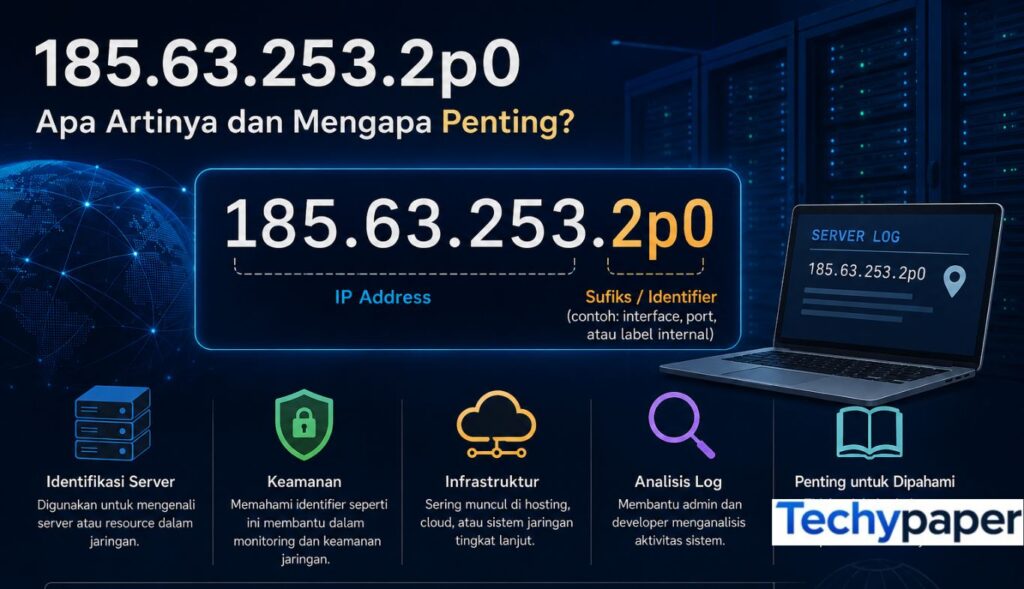

The internet is built on countless technical identifiers that help devices communicate efficiently across networks. While many people are familiar with website names, fewer understand the numerical addresses and unique identifiers working behind the scenes. One such term that has recently attracted attention is 185.63.253.2p0. Although it appears technical at first glance, many users are curious about what it means, whether it is an IP address, and why it appears in online searches.
As digital technology continues to evolve throughout Indonesia and around the world, understanding network-related terms has become increasingly valuable. Whether you are a student, website owner, IT enthusiast, or someone who simply encountered this keyword online, learning more about 185.63.253.2p0 can help you better understand how internet infrastructure functions.
Many unusual network identifiers become popular because they appear in server logs, hosting platforms, security reports, or online discussions. However, not every identifier represents a publicly accessible IP address. Some are internal labels, system-generated references, or customized technical strings used for administrative purposes.
This guide explains 185.63.253.2p0 in simple language while exploring its possible meanings, technical background, security considerations, and practical relevance. By the end of this article, you will have a much clearer understanding of why this keyword matters and how to approach similar technical terms responsibly.
Understanding 185.63.253.2p0
The keyword 185.63.253.2p0 looks very similar to an IPv4 internet address, but there is one important difference. Traditional IPv4 addresses consist of four numerical groups separated by periods. The addition of the letters and numbers at the end makes this identifier different from a standard public IP address.
This distinction is important because many technical systems extend ordinary network addresses with additional labels. These labels may identify a specific interface, virtual connection, software process, hardware port, or internal configuration. As a result, 185.63.253.2p0 should not automatically be interpreted as a standard internet address without understanding the context in which it appears.
Modern networking environments have become much more sophisticated than they were a decade ago. Cloud computing, virtualization, container technology, and enterprise networking all rely on custom identifiers that make system management easier. Therefore, encountering a string such as 185.63.253.2p0 is no longer unusual for professionals working with servers or advanced networking tools.
For everyday internet users, however, this type of identifier may appear confusing because it combines familiar IP formatting with additional characters. That combination naturally raises questions about its purpose and meaning.
Is 185.63.253.2p0 an IP Address?
One of the most common questions concerns whether 185.63.253.2p0 should be considered an actual IP address.
A standard IPv4 address follows a strict numerical format consisting of four octets. Each section contains only numbers within a defined range. Because 185.63.253.2p0 includes the suffix “p0,” it does not match the formal IPv4 specification used for public internet routing.
That does not necessarily mean the identifier is invalid. Instead, it often suggests that additional information has been attached to what resembles an IP address. Software developers, system administrators, and hosting providers frequently use naming conventions that append identifiers to distinguish interfaces or virtual resources.
In certain environments, these extra characters may help separate multiple virtual machines operating on the same server. They can also identify network ports, storage paths, monitoring systems, or specialized infrastructure components. The exact meaning depends entirely on the platform where the identifier is being used.
Understanding this distinction helps prevent confusion when reading technical documentation or server logs.
How Internet Addressing Works
To understand 185.63.253.2p0, it helps to first understand how internet addressing generally functions.
Every device connected to the internet communicates through network addresses that allow information to travel between computers. These addresses act similarly to mailing addresses for physical locations. Instead of delivering letters, internet addresses deliver digital information across networks.
When someone enters a website address into a browser, several background processes occur almost instantly. Domain Name System services translate readable website names into numerical IP addresses, allowing servers to locate one another efficiently.
Large organizations often manage thousands of servers simultaneously. Instead of relying only on standard IP addresses, they frequently develop additional naming systems to organize hardware, software, virtual machines, and cloud resources. As a result, identifiers resembling 185.63.253.2p0 become practical administrative tools even though they are not public-facing internet addresses.
This layered approach improves operational efficiency while reducing the likelihood of configuration errors in large-scale environments.
Possible Meanings of the “p0” Suffix
The suffix attached to 185.63.253.2p0 is what makes the keyword especially interesting.
In technical environments, suffixes often indicate a particular interface, partition, process, or network port. Although there is no universal definition for “p0,” several logical possibilities exist depending on the software platform.
Some enterprise systems label physical ports using abbreviated identifiers. Others identify virtual adapters that connect applications to internal networks. Cloud hosting environments may also create automatically generated identifiers to distinguish virtual instances sharing similar configurations.
Storage management software occasionally uses similar suffixes to identify partitions or logical devices. Likewise, container orchestration platforms assign unique labels that simplify automated deployment and maintenance.
Because software vendors implement their own naming conventions, the meaning of 185.63.253.2p0 cannot be determined accurately without knowing the system where it originated. Context always remains the most important factor when interpreting technical identifiers.
For this reason, experts recommend examining surrounding logs, documentation, or application settings instead of assuming that every identifier has a universal meaning.
Why People Search for 185.63.253.2p0
Interest in 185.63.253.2p0 has increased because many users encounter unfamiliar technical strings during routine online activities.
Website owners reviewing hosting dashboards sometimes notice unusual identifiers while checking server statistics. System administrators may discover similar entries within firewall reports or access logs. Developers occasionally encounter them during software testing or application deployment.
Curiosity naturally follows because unfamiliar identifiers often appear without explanation. Rather than ignoring them, many users search online to understand whether the identifier represents a security concern, server location, network configuration, or software feature.
In Indonesia, where digital businesses, cloud hosting, and online entrepreneurship continue growing rapidly, more professionals regularly interact with server infrastructure than ever before. As technical literacy improves, searches for networking terms such as 185.63.253.2p0 are becoming increasingly common.
Another reason for growing interest involves cybersecurity awareness. Internet users today are more cautious about unfamiliar technical references, making it understandable that seemingly unusual identifiers generate questions about safety, privacy, and authenticity.
Security and Privacy Considerations
Understanding the security implications of 185.63.253.2p0 is just as important as understanding its technical structure. Whenever an unfamiliar identifier appears in server logs, monitoring tools, or website analytics, it is natural to wonder whether it indicates normal activity or something that requires attention.
In many situations, identifiers similar to 185.63.253.2p0 are completely harmless. They may simply represent an internal network reference, a virtual machine identifier, or an automatically generated label created by software. However, responsible administrators never rely on assumptions alone. They investigate the context in which the identifier appears before deciding whether any action is necessary.
Cybersecurity professionals recommend reviewing the surrounding information rather than focusing only on the identifier itself. For example, checking timestamps, associated applications, user activity, and system events often provides valuable clues. This broader approach helps distinguish between ordinary system operations and unusual behaviour that may require further investigation.
It is also important to avoid sharing sensitive server information publicly. Even if 185.63.253.2p0 turns out to be harmless, publishing complete server logs or network configurations online may expose unnecessary technical details. Protecting infrastructure information remains a fundamental aspect of maintaining digital security.
Businesses operating websites in Indonesia should also ensure that their hosting providers maintain updated security practices. Firewalls, intrusion detection systems, regular software updates, and strong authentication methods contribute far more to overall protection than analysing individual identifiers alone.
How Hosting Providers May Use Similar Identifiers
Modern web hosting platforms manage thousands of servers simultaneously. To keep operations organised, providers frequently assign custom labels that extend beyond traditional IP addresses.
An identifier such as 185.63.253.2p0 could theoretically appear within internal dashboards, virtual server environments, or automated monitoring systems. Rather than being visible to website visitors, these references help administrators locate specific resources quickly.
Cloud computing has made this approach even more common. Instead of managing only physical hardware, providers now oversee virtual servers, isolated containers, scalable storage systems, and distributed computing environments. Each resource often receives a unique identifier that simplifies maintenance and troubleshooting.
For example, a hosting engineer investigating a performance issue may need to identify the exact virtual interface connected to a server. Custom naming conventions make that process significantly more efficient, reducing the possibility of configuration mistakes in large infrastructures.
Although users rarely interact directly with these identifiers, understanding their purpose helps explain why terms like 185.63.253.2p0 occasionally appear in technical documentation or diagnostic reports.
Common Situations Where 185.63.253.2p0 May Appear
People usually encounter 185.63.253.2p0 unexpectedly rather than searching for it intentionally. Several situations may expose users to similar technical identifiers.
Website administrators often discover unfamiliar references while reviewing access logs generated by hosting control panels. These logs record network activity, application behaviour, and system performance to assist with troubleshooting.
Software developers may encounter similar strings during testing, especially when working with virtual machines or containerised applications. Development environments frequently generate automated identifiers that resemble public network addresses while serving entirely internal purposes.
Network engineers also work with complex naming conventions when configuring routers, switches, and virtual interfaces. Rather than memorising every physical connection, administrators rely on structured identifiers that improve accuracy and efficiency.
Cybersecurity analysts frequently examine system logs containing thousands of technical references each day. Their responsibility involves recognising patterns instead of reacting to every unfamiliar entry individually. Context, consistency, and associated events provide much more useful information than isolated identifiers.
Students learning networking concepts may also come across 185.63.253.2p0 while reading online discussions or technical tutorials. Although the identifier itself may not represent a standard networking element, it serves as an excellent example of how software systems frequently extend conventional addressing formats.
The Importance of Context in Technical Analysis
One of the biggest mistakes people make when encountering unfamiliar identifiers is attempting to assign a universal meaning without considering context.
Technology platforms vary enormously. A suffix used by one cloud provider may represent something entirely different in another environment. Likewise, software vendors often develop their own naming standards that make sense only within their specific applications.
For this reason, experienced IT professionals begin every investigation by identifying where the information originated. Was the identifier found inside a firewall log? Did it appear in a database record? Was it generated by virtualisation software or monitoring tools? Answering these questions usually provides far more insight than analysing the identifier in isolation.

The same principle applies to 185.63.253.2p0. Without knowing the originating system, any interpretation remains speculative. Responsible analysis always combines technical knowledge with contextual evidence before reaching conclusions.
This careful methodology reduces false alarms while improving the accuracy of troubleshooting efforts.
Best Practices When Investigating Technical Identifiers
Whenever you encounter 185.63.253.2p0 or another unfamiliar network reference, approaching the situation methodically produces the best results.
Begin by identifying the application, server, or service where the identifier appeared. Knowing its source immediately narrows the range of possible explanations.
Next, review related log entries recorded immediately before and after the identifier. Technical systems often provide valuable contextual information that explains why a particular reference was generated.
Documentation should always be your next resource. Software manuals, vendor knowledge bases, and official technical references frequently explain internal naming conventions that initially appear confusing.
If uncertainty remains, consulting experienced system administrators or qualified IT professionals is usually more productive than relying on unverified online discussions. Professional guidance helps prevent incorrect assumptions while ensuring that genuine security concerns receive appropriate attention.
Finally, maintain accurate documentation of your own infrastructure. Organisations that consistently record server configurations, virtual machines, and network layouts find it much easier to recognise unfamiliar identifiers when they appear.
Why Technical Literacy Matters in Today’s Digital World
Indonesia’s digital economy continues to expand rapidly, increasing demand for reliable websites, secure online services, and efficient cloud infrastructure. As more businesses embrace digital transformation, understanding basic networking concepts becomes increasingly valuable.
Terms like 185.63.253.2p0 remind us that much of the internet operates behind the scenes through systems that ordinary users rarely see. Although these identifiers may appear complicated initially, learning their purpose improves confidence when working with modern technology.
Technical literacy also supports better cybersecurity awareness. Individuals who understand the difference between public IP addresses, internal identifiers, virtual interfaces, and server labels are less likely to misinterpret normal system behaviour as a security threat.
Educational resources continue making networking concepts more accessible than ever before. Whether someone manages a personal website, studies information technology, or simply enjoys learning about internet infrastructure, developing a basic understanding of these topics provides long-term benefits.
Moreover, organisations benefit when employees possess foundational technical knowledge. Clear communication between technical and non-technical teams reduces misunderstandings, accelerates troubleshooting, and supports more effective decision-making.
As cloud services, artificial intelligence, and connected devices continue evolving, the ability to interpret technical information responsibly will become an increasingly valuable skill. Understanding identifiers like 185.63.253.2p0 is only one small part of that broader digital literacy journey.
Frequently Asked Questions
What is 185.63.253.2p0?
185.63.253.2p0 is a technical identifier that resembles an IPv4 address but includes an additional suffix, making it different from a standard public IP address. It may represent a custom label, virtual interface, internal system reference, or software-generated identifier depending on the environment in which it appears. Without knowing its source, it is impossible to assign a single universal definition. Understanding the surrounding context is essential for accurate interpretation.
Is 185.63.253.2p0 a valid public IP address?
No, 185.63.253.2p0 is not considered a standard public IPv4 address because public IPv4 addresses contain only four numerical sections separated by periods. The addition of the “p0” suffix means it falls outside the conventional IPv4 format. However, many enterprise platforms and cloud systems extend identifiers with additional characters to distinguish resources, interfaces, or internal components.
Why do people search for 185.63.253.2p0 online?
Many users discover 185.63.253.2p0 while reviewing server logs, hosting dashboards, network monitoring tools, or technical documentation. Since the identifier looks similar to an IP address, curiosity naturally leads people to search for more information. Others may encounter it while troubleshooting software, studying networking concepts, or analysing infrastructure reports. Increased awareness of cybersecurity has also encouraged users to investigate unfamiliar technical references rather than ignoring them.
Can 185.63.253.2p0 indicate a cybersecurity problem?
Not necessarily. In most cases, 185.63.253.2p0 alone does not indicate malicious activity. It may simply be an internal identifier generated by software or a network management system. Security professionals recommend examining related logs, timestamps, user activity, and system events before drawing conclusions. Looking at the broader context helps determine whether the identifier is part of normal operations or deserves additional investigation.
Where might 185.63.253.2p0 commonly appear?
You may encounter 185.63.253.2p0 in server logs, virtual machine configurations, cloud hosting platforms, diagnostic reports, firewall records, or network monitoring applications. Developers, system administrators, and IT professionals often work with similar identifiers while managing complex infrastructures. Everyday users are less likely to see such references unless they are working with technical systems or reviewing backend reports.
How should I investigate an unfamiliar identifier like 185.63.253.2p0?
The most effective approach is to begin by identifying where 185.63.253.2p0 appeared. Reviewing surrounding log entries, checking official documentation, and understanding the software or platform generating the identifier usually provide valuable insights. If uncertainty remains, consulting experienced IT professionals or your hosting provider is preferable to relying on assumptions or unverified information found online.
Why is learning about identifiers like 185.63.253.2p0 important?
Learning about identifiers such as 185.63.253.2p0 improves overall digital literacy. As cloud computing, website hosting, cybersecurity, and online services continue expanding, understanding basic networking concepts becomes increasingly useful. Even if users never work directly with advanced infrastructure, recognising the purpose of technical identifiers helps them interpret information more confidently and communicate more effectively with technical professionals.
Conclusion
The growing interest in 185.63.253.2p0 demonstrates how increasingly curious internet users have become about the technology operating behind modern websites and online services. Although the identifier resembles a traditional IPv4 address, the additional suffix indicates that it most likely represents a customised technical reference rather than a standard public internet address.
Throughout this guide, we explored how 185.63.253.2p0 may relate to virtual environments, cloud infrastructure, hosting platforms, server administration, and network management. While its exact meaning depends entirely on the environment in which it appears, understanding the principles behind these identifiers helps remove much of the confusion surrounding them. Instead of making assumptions, users should always consider the context, examine supporting information, and consult official documentation whenever possible.
As Indonesia’s digital ecosystem continues to expand, technical awareness becomes increasingly valuable for website owners, developers, students, and businesses alike. Learning about networking concepts, infrastructure management, and cybersecurity not only improves troubleshooting skills but also supports safer and more informed online practices.

Ultimately, 185.63.253.2p0 serves as an excellent example of how modern technology often uses customised identifiers to organise increasingly complex digital systems. Whether you encountered 185.63.253.2p0 in a server log, hosting dashboard, or online discussion, approaching it with curiosity and careful analysis is the best strategy. By understanding how these technical references function, readers can navigate the digital world with greater confidence and make better-informed decisions whenever unfamiliar identifiers appear.