
Understanding how your vehicle behaves under different settings is essential for maximizing your ownership experience. Many drivers frequently search for a do the driving modes in Cadillac Lyriq offer different ranges or battery usages guide to see if they can stretch their vehicle’s efficiency. The short answer is that while the modes do not inherently change the battery capacity, they significantly influence how that energy is consumed.
By altering throttle response, steering weight, and regenerative braking behavior, these settings dictate how quickly you drain your charge. This article provides the clarity you need to master your efficiency behind the wheel.
Direct Impact of Drive Modes on Efficiency

When you investigate whether the driving modes in Cadillac Lyriq offer different ranges or battery usages, you quickly realize that the car‘s software is the primary gatekeeper of power. These modes adjust the torque output and the sensitivity of the accelerator pedal.
In modes designed for efficiency, the system intentionally blunts the aggression of the electric motors. This prevents the “jackrabbit” starts that drain a battery’s state of charge far faster than steady acceleration.
You are essentially choosing a calibration profile for the vehicle’s powertrain. While the battery capacity remains a fixed hardware specification, the software determines how aggressively you draw from that reservoir.
A mode that prioritizes performance will inevitably consume more energy per mile because it allows for higher peak power draws. Conversely, a conservation-oriented mode keeps the draw curve flatter and more predictable.
Tour Mode and Daily Efficiency
Tour Mode serves as the default setting for most Cadillac Lyriq owners, balancing comfort with standard energy consumption. It provides a linear pedal feel that mimics traditional internal combustion vehicles without the jarring acceleration of performance-heavy profiles.
Because it avoids aggressive power surges, it is generally the most efficient mode for everyday commuting. Most drivers find that their real-world miles per kilowatt-hour (mi/kWh) are highest when sticking to this setting.
The vehicle’s computer manages the energy distribution to maintain a smooth, predictable ride. By minimizing sudden spikes in current draw, Tour Mode helps keep the battery temperature stable and the discharge rate consistent.
You aren’t just driving; you are allowing the onboard management system to optimize the flow of electrons. This is often the best choice for maximizing your overall range on long highway stretches.
Sport Mode and Power Consumption
Sport Mode is designed to transform the driving dynamics of the Cadillac Lyriq by sharpening the accelerator response. When you engage this mode, the car becomes significantly more eager to deliver peak torque to the wheels.
This immediate responsiveness is thrilling, but it comes with a measurable cost to your battery usage. Every time you accelerate quickly, you are drawing a larger current from the battery pack.
Over a long trip, frequent use of Sport Mode will result in a lower total range compared to Tour or Snow/Ice modes. The energy that would have been saved by gradual acceleration is instead spent on rapid velocity gains.
If you are operating near the limits of your charge, it is wise to switch out of Sport Mode. The efficiency penalty is a direct trade-off for the heightened engagement and handling precision the mode provides.
Read More: Dreamwithjeff com: The Practical Personal Growth Platform That Helps You Build Real Change
Snow/Ice Mode for Low-Traction Situations
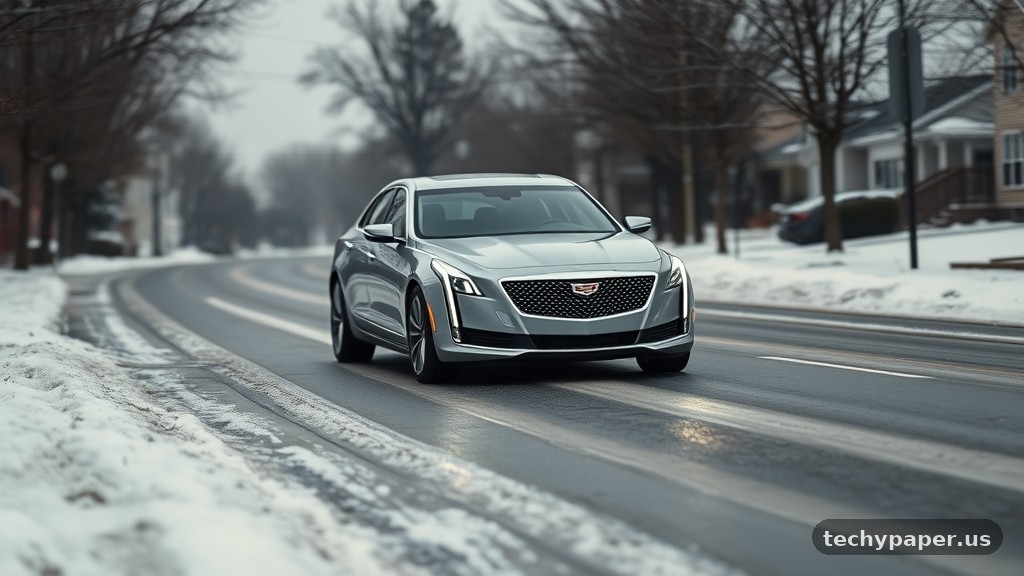
The Snow/Ice mode is specifically engineered for safety rather than pure range, yet it indirectly influences battery usage patterns. By limiting torque output to prevent wheel spin, the system inherently prevents the wasteful energy spikes associated with traction loss.
In slippery conditions, this mode ensures that every bit of energy is used for forward momentum rather than spinning tires. You might find that your efficiency remains quite high in this mode, provided you are driving steadily.
This setting also modifies how the vehicle interacts with the road surface to ensure stability. Because it emphasizes control, it discourages the rapid, energy-intensive maneuvers that characterize sportier driving.
While it is not explicitly a “range extender,” its restrictive nature on high-power output naturally keeps the battery drain lower than it would be if you were struggling for grip in a more aggressive mode. It is a smart, conservative way to manage your energy when the weather turns difficult.
The Role of Regenerative Braking
Regenerative braking is a vital component of the energy management system in the Cadillac Lyriq. Regardless of the drive mode you select, the car uses the electric motors as generators to slow the vehicle and return energy to the battery.
This process is effectively a form of “fueling” while you drive. You can further customize this experience using the pressure-sensitive paddle on the steering wheel, known as Regen on Demand.
Different drive modes may have default settings for how aggressive this regeneration feels when you lift your foot off the accelerator. Higher levels of regeneration mean that more energy is captured and sent back into the battery pack during deceleration.
This is particularly effective in stop-and-go city traffic where you are constantly slowing down. By mastering the use of regenerative braking, you can reclaim a significant percentage of the energy that would otherwise be lost as heat in traditional brake pads.
Comparison of Driving Modes
To better visualize how your choices affect the vehicle, consider the following data points regarding how different modes handle power and potential efficiency. While individual driving style is the biggest factor, the vehicle’s internal logic varies significantly across these profiles.
| Drive Mode | Primary Focus | Efficiency Impact | Acceleration Profile |
|---|---|---|---|
| Tour | Balanced Comfort | High (Baseline) | Linear and Smooth |
| Sport | Performance | Lower | Aggressive and Sharp |
| Snow/Ice | Traction Control | Moderate | Restricted for Stability |
| My Mode | Custom User Settings | Variable | Configurable |
Factors Beyond Drive Modes
It is important to remember that drive modes are only one part of the efficiency equation. Factors such as ambient temperature, tire pressure, and climate control usage often outweigh the impact of the mode itself.
For instance, running the cabin heater at high temperatures in winter will drain the battery much faster than switching between Tour and Sport modes. You can find detailed information on how these external variables affect electric vehicles at the official U.S. government source for fuel economy data.
Aerodynamics also play a massive role, especially at highway speeds. Driving at 80 mph instead of 65 mph will have a more drastic effect on your range than any selection on your dashboard.
Similarly, carrying heavy cargo or using roof racks increases the energy required to overcome drag. Always consider these physical realities before assuming your drive mode is the sole culprit for high energy usage.
Frequently Asked Questions
Does My Mode allow me to save more energy than Tour Mode?
Yes, if you configure My Mode to use the most efficient acceleration settings and ensure the climate control is optimized, you can potentially exceed the efficiency of the default Tour Mode. However, for most users, the factory-default Tour Mode is already tuned to be highly efficient.
Will using Sport Mode damage my battery over time?
Using Sport Mode does not damage your battery, as the system is designed to handle the power delivery requested by that mode. It simply drains the available energy faster, which may increase the number of charge cycles you perform over the life of the car.
Does regenerative braking work differently in Snow/Ice mode?
The system often modulates regenerative braking in Snow/Ice mode to be less abrupt, preventing the wheels from locking up or losing traction. This is a safety feature that ensures the deceleration remains predictable on low-friction surfaces.
Should I switch modes while the car is moving?
You can safely switch between drive modes while the vehicle is in motion. The Cadillac Lyriq software will immediately adjust the powertrain parameters, though you might notice a slight change in the pedal feel and steering weight as the transition occurs.
Does the Cadillac Lyriq have an Eco mode?
The Cadillac Lyriq does not have a dedicated button labeled “Eco.” Instead, the Tour Mode and the judicious use of regenerative braking serve as the primary tools for achieving maximum efficiency and range.
Final Thoughts on Energy Management
Mastering the balance between performance and range is part of the joy of driving an electric vehicle. While it is clear that the driving modes in Cadillac Lyriq offer different ranges or battery usages, the differences are ultimately a reflection of your own driving habits. Choosing the right mode for your environment—whether it is the efficiency of Tour Mode or the safety of Snow/Ice—allows you to take command of your energy consumption.
By paying attention to how your vehicle responds to your inputs, you can easily extend your travel distance and reduce the frequency of your charging stops. Remember that the car is an intelligent machine, but you are the pilot who decides how much of its potential to unleash.
Experiment with these settings on your regular routes to see how they impact your specific driving style. Enjoy the quiet power and the sophisticated control that your vehicle provides every time you head out on the road.