

Discovering your physiological limits through a simple reaction speed test provides a fascinating glimpse into how your brain processes sensory information. Whether you are an athlete, a gamer, or someone simply curious about their cognitive sharpness, understanding these metrics offers real value. By evaluating how quickly your nervous system can translate a visual stimulus into a physical action, you gain insight into your mental agility.
This article examines the science behind these measurements, helping you understand what your results mean and how they compare to the general population. You will find that these numbers are not just scores, but reflections of your current biological state and focus levels.
The average human reaction time to a visual stimulus typically falls between 200 and 250 milliseconds. When you take a standard reaction speed test online, you are measuring the duration between the moment a color changes on your screen and the moment you physically click your mouse or tap your device. Most people find that their performance fluctuates based on factors like fatigue, distraction, and even the quality of their hardware.
If you consistently score below 200 milliseconds, you are performing faster than the vast majority of the population. Conversely, scores above 300 milliseconds often indicate that your focus is compromised or that your equipment is introducing significant input lag.
The Mechanics of Human Reflexes

Your central nervous system operates like a complex electrical circuit, sending signals from your eyes to your brain and back to your muscles. When you participate in a reaction speed test, your eyes detect a change on the screen, such as a color shift from red to green. This visual data must be transmitted via the optic nerve to the visual cortex, where it is processed and interpreted.
Once your brain recognizes the cue, it generates a motor command that travels through your spinal cord to your hand, triggering the physical movement. This entire journey happens in a fraction of a second, yet it is susceptible to various biological bottlenecks.
Several physiological factors influence how quickly these signals propagate through your body. Myelination, the process by which nerve fibers are insulated with a fatty substance, plays a major role in the speed of electrical conduction. Individuals with higher levels of physical fitness often exhibit faster neural transmission, as regular exercise improves cardiovascular health and oxygen delivery to the brain.
Furthermore, your age impacts these pathways significantly, as neural processing speeds tend to peak in early adulthood and decline gradually thereafter. Understanding these biological constraints helps you interpret your performance on a reaction speed test with appropriate context.
Read More: What Is MagFuseHub.com? Full Site Breakdown 2026 Update?
External Factors Affecting Your Scores
It is easy to assume that a slow result on a test reflects a personal shortcoming, but technical variables often play a larger role than your own biological reflexes. If you are using a standard office monitor or a wireless mouse, you might be dealing with significant input lag that adds tens of milliseconds to your total time.
Modern gaming monitors with high refresh rates and low response times are designed specifically to minimize this delay. When you want to find your true reaction speed, using a wired mouse and a high-performance screen is essential to ensure the numbers you see are accurate.
Environmental factors are equally critical when you sit down to test your reflexes. If you are tired, your brain’s ability to maintain sustained attention is severely diminished, leading to slower detection of the stimulus. You can find more detailed information on how cognitive health relates to sensory processing at the National Institutes of Health, which tracks research on brain function.
Stress, caffeine intake, and even the temperature of the room can shift your results by significant margins. Controlling these variables is the only way to get a consistent baseline that reflects your actual human capability.
Comparing Your Results to the Average
When you look at your scores, it helps to have a frame of reference for what constitutes a “good” versus a “typical” result. While the 200 to 250 millisecond range is standard, competitive gamers often push their limits well below the 180ms threshold through repetitive practice.
Professional athletes in sports like baseball or table tennis, where split-second decisions are mandatory, often demonstrate elite reflexes that are honed over years of specific training. Most casual users will find that their performance stabilizes once they overcome the initial learning curve of the interface.
The following table provides a general breakdown of how different reaction time ranges are typically perceived in casual and competitive settings. Keep in mind that these figures are broad estimates and individual results will vary based on the specific testing platform used.
| Reaction Time (ms) | Performance Category |
|---|---|
| Under 150ms | Elite/Professional Athlete |
| 150ms – 200ms | Highly Responsive |
| 200ms – 250ms | Average/Typical |
| 250ms – 300ms | Slightly Below Average |
| Above 300ms | Distracted or High Latency |
Why Practice Matters for Reflexes
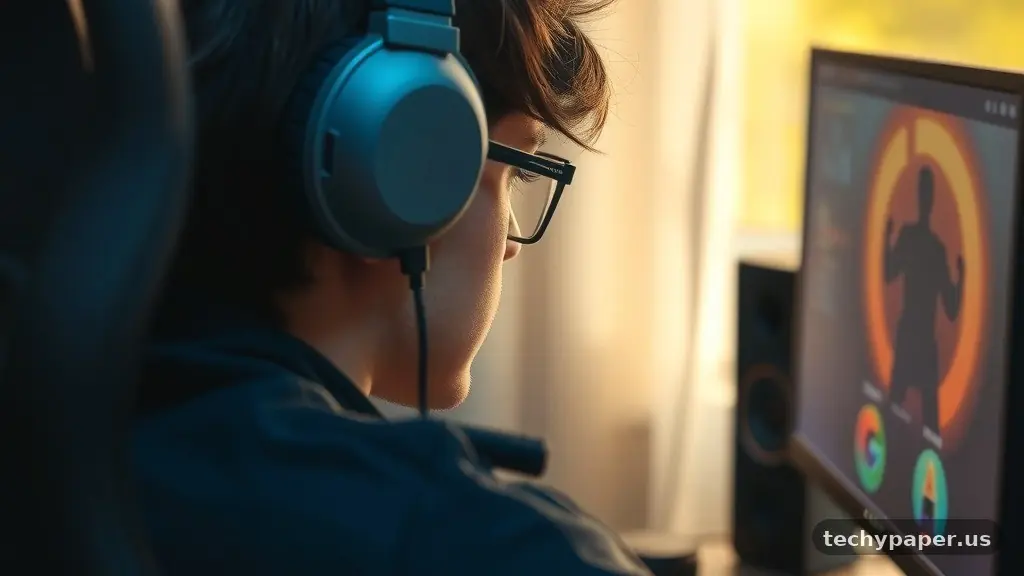
Repeatedly engaging in a reaction speed test can lead to genuine improvements in your performance, though this is often due to neural adaptation rather than a physical change in your biology. Your brain is highly plastic, meaning it can optimize the pathways used for specific tasks through repetition. When you perform the same task dozens of times, your brain begins to anticipate the stimulus more effectively.
You learn to filter out irrelevant visual noise and focus your attention on the specific area of the screen where the change will occur. This is known as perceptual learning, and it is a powerful tool for increasing your speed.
However, it is important to distinguish between “learned anticipation” and “raw reaction.” If you are staring at a screen waiting for a color to change, your brain is in a state of high arousal and readiness, which is rarely mirrored in real-world scenarios. True reflexes involve responding to unpredictable stimuli, whereas online tests are often highly predictable.
While you can certainly get faster at the test itself, this may not translate directly to faster reflexes in a sport or a driving situation. Focus on the process of staying alert rather than just trying to game the system for a lower number.
The Role of Sleep and Cognitive Health
Your sleep quality is perhaps the most significant predictor of your reaction time on any given day. Studies consistently show that sleep deprivation impacts cognitive performance similarly to alcohol intoxication. When you are sleep-deprived, your brain struggles to maintain the level of alertness required to process visual stimuli rapidly.
You might find that your reaction speed test results are significantly slower after a poor night of rest, and this is a clear signal that your central nervous system needs recovery time. Prioritizing consistent, restorative sleep is the most effective way to keep your reflexes at their natural peak.
Beyond sleep, your overall cognitive health influences your ability to react to changing environments. Mental fatigue, often caused by long periods of screen time or high-stress work, can lead to “brain fog” that slows down your processing. If you find your scores are consistently declining throughout the day, it is likely a sign of mental exhaustion rather than a physical decline in your reflexes.
Taking short, frequent breaks away from screens can help reset your focus and improve your performance on subsequent tests. Always listen to your body’s signals rather than forcing a high-intensity performance when you are already feeling drained.
Common Misconceptions About Reflexes
A frequent myth is that people with certain neurological conditions automatically have faster or slower reflexes than the general population. While research into conditions like ADHD shows that there are differences in how individuals process information and maintain focus, it does not necessarily translate to a universal slowing of reflexes.
Some studies suggest that the hyper-focus associated with certain conditions can actually lead to extremely fast responses in specific, high-stimulus tasks. It is dangerous to generalize, as human biology is incredibly diverse and individual variations far outweigh any broad diagnostic trends.
Another common misconception is that reaction time is a fixed metric that never changes throughout your life. While it is true that neurological processing speeds generally peak in your twenties and decline slowly as you age, you can mitigate this through lifestyle choices. Regular cardiovascular exercise, a balanced diet, and active brain training help maintain cognitive health well into later life.
You are not destined to have “slow” reflexes just because of your age. Consistent engagement with challenging activities keeps your neural pathways active and responsive, preserving your mental agility for as long as possible.
Optimizing Your Testing Environment
To get the most accurate results, you need to minimize the variables that have nothing to do with your biological speed. Start by ensuring your computer is not running resource-heavy background tasks that might stutter the display. A stable frame rate is crucial because even a single dropped frame can cause a delay in the visual stimulus appearing on your screen.
If you are using a browser, try a fresh, clean window with no other tabs open to ensure your system resources are dedicated entirely to the task at hand. These small steps prevent technical bottlenecks from skewing your data.
Consider these essential steps for setting up a reliable environment for your tests:
- Use a wired USB mouse to eliminate wireless signal interference and latency.
- Disable “Vertical Sync” (V-Sync) in your graphics settings to reduce input lag.
- Ensure your monitor is set to its highest native refresh rate (e.g., 144Hz or 240Hz).
- Sit in a comfortable, upright position to promote alertness and blood flow.
- Test in a quiet room with minimal distractions to maximize your focus.
Frequently Asked Questions
Is a 250ms reaction time considered slow?
A 250ms result is generally considered the upper end of the average range for adults. While it is not “slow” in a medical or functional sense, it is often where most people score when they are not specifically training. You can certainly improve this with practice and better focus.
Do caffeine and sugar affect my reaction speed?
Caffeine is a stimulant that can temporarily increase alertness and shorten your reaction times by blocking adenosine receptors in the brain. However, sugar typically causes a spike followed by a crash, which can lead to fatigue and slower performance shortly after the initial boost. Moderate, consistent habits are much better for long-term cognitive stability than relying on substances for a quick fix.
Can I actually train my brain to be faster?
Yes, you can improve your performance through consistent practice, which helps your brain become more efficient at recognizing visual cues. This is less about “speeding up” your nerves and more about reducing the time your brain spends processing the incoming signal. Most of the gains you see from training come from better attention and reduced cognitive load.
Does using a smartphone affect my reaction test?
Testing on a smartphone often yields slower results than on a PC due to the inherent input lag of touchscreens and the way mobile browsers handle touch events. The delay between your finger touching the glass and the device registering the tap is often significant. For the most accurate measurement, a desktop setup with a wired mouse is the industry standard.
Is there a limit to how fast a human can react?
Physiologically, there is a hard limit dictated by the speed of nerve conduction and muscle contraction. Most experts agree that human reaction times rarely drop below 100 milliseconds for a simple visual task. Anything faster than that is usually a result of anticipation or a glitch in the testing hardware rather than true, un-cued reaction.
Reflecting on your reaction speed test results provides a valuable snapshot of your current cognitive state and physical alertness. By understanding that these numbers are influenced by everything from your sleep quality to your monitor’s refresh rate, you can move away from viewing them as a definitive judgment of your abilities. Use these tests as a fun way to practice focus and keep your brain engaged, rather than as a source of stress.
Whether you are aiming to shave a few milliseconds off your time for a game or simply curious about your body, remember that consistent, healthy habits are the real key to maintaining your mental edge. Keep testing, stay curious, and continue finding new ways to challenge your reflexes in your daily life.